THE FORGOTTEN ICON

Lucia Moholy

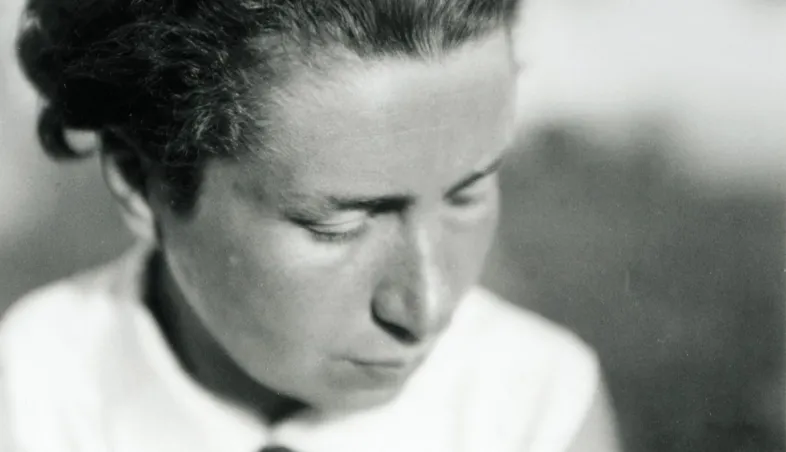
Black and white portrait of Lucia Moholy, looking down
Picture representing Lucia Moholy

Lucia Moholy, the forgotten photographer of the Bauhaus

Photographer, writer, and historian, Lucia Moholy was born in Prague in 1894.
After World War I, she met László Moholy-Nagy in Berlin, whom she married in 1921.
In 1923, her husband was invited to teach at the Bauhaus school, and this is how Lucia joined the movement as a photographer.

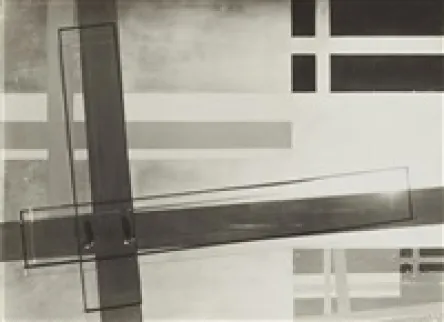
Her photographic style aligns with the "Neue Sachlichkeit," or New Objectivity. This style is characterized by the raw, clear, and authentic quality of the photographs, reflecting the Bauhaus movement.
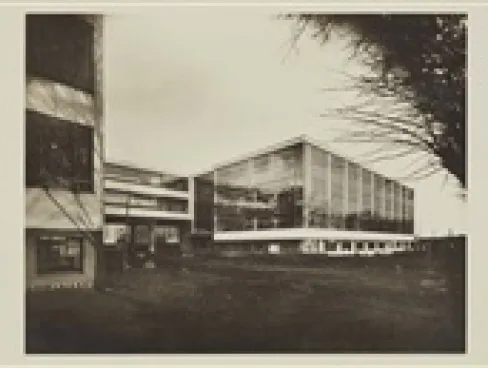
Her work also served to document part of the school's construction (unfinished, though opened in 1919) as well as the activation of various departments within the school
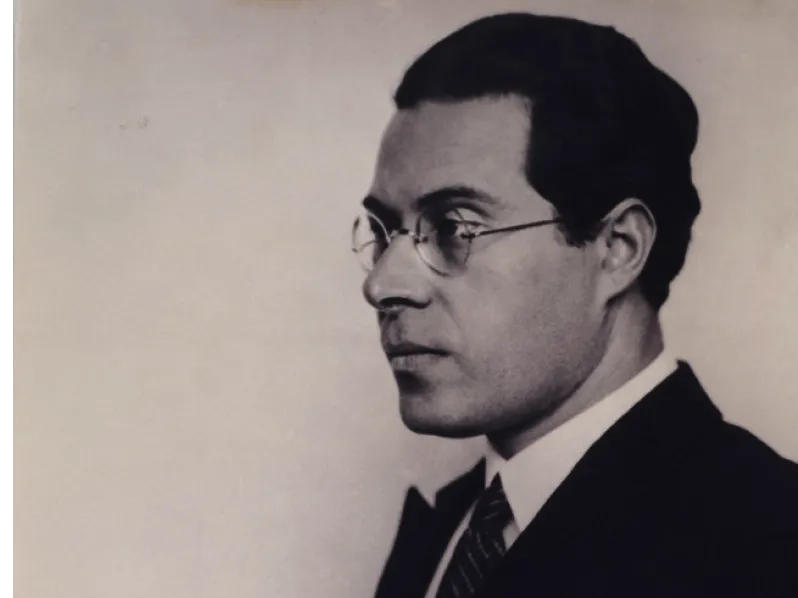
Black and white portrait of László Moholy-Nagy, seen in profile, wearing glasses
Her husband : LASZLO
MOHOLY

Portrait of Laszlo Moholy-Nagy.

More concretely, what exactly is the
Bauhaus ?

The Bauhaus is a design school founded in 1919 in Weimar by Walter Gropius . Its goal was to bring together art, craftsmanship, and industry to create objects and buildings that were both beautiful, functional, and accessible to everyone. The school also gave its name to the movement: the Bauhaus.

The Bauhaus profoundly influenced the way modern design is conceived, particularly by emphasizing simple, rational forms and prioritizing function over aesthetics.

The school also welcomed many great artists and designers. For example, Paul Klee, Wassily Kandinsky, Marcel Breuer, László Moholy-Nagy, and Lucia Moholy each contributed to making the Bauhaus an icon of modern design, still influential in 2025.

After moving to Dessau and then Berlin, the Bauhaus closed its doors in 1933 due to the rise of the Nazi regime, which considered the school too avant-garde and “degenerate.” Despite its short existence, it had a lasting global influence, laying the foundations for modernism in architecture, photography, and especially industrial design.

Lucia and the Matilda Effect

The Matilda Effect is the phenomenon whereby women’s work is overlooked or attributed to men due to sexism.
It was first identified in scientific writings and theories, but in reality, it extends to many fields, including intellectual circles, art, and design.
The term comes from American activist Matilda Joslyn Gage, who denounced the way women and their work were erased from history.

Lucia Moholy’s career perfectly illustrates this effect. As a Bauhaus photographer, she captured the iconic images of the school, its buildings, and the artists’ creations between 1923 and 1928. Yet, her role in documenting the school was largely ignored. Her photographs became the official representations of the Bauhaus, but they were published without her name or attributed to her husband, the painter and photographer László Moholy-Nagy, and even to Walter Gropius, the school’s founder.

Forced to flee Germany in 1933, Lucia left behind her negatives, which Gropius kept and used without crediting her. This act further erased her from Bauhaus history. She lost not only her works but also the recognition for them.

For years, Lucia was erased from Bauhaus history. However, during the second half of the 20th century, she fought to reclaim her work and finally gain the recognition she deserved.
 Although most of her photographs were never returned to her, she is today recognized as a prominent figure of the Bauhaus and also as a typical example of the Matilda Effect, due to her struggle for visibility and the legitimacy of her art, even within a male-dominated field: design.

Next article